PNG to SVG: Convert PNG Images to Vector SVG Online

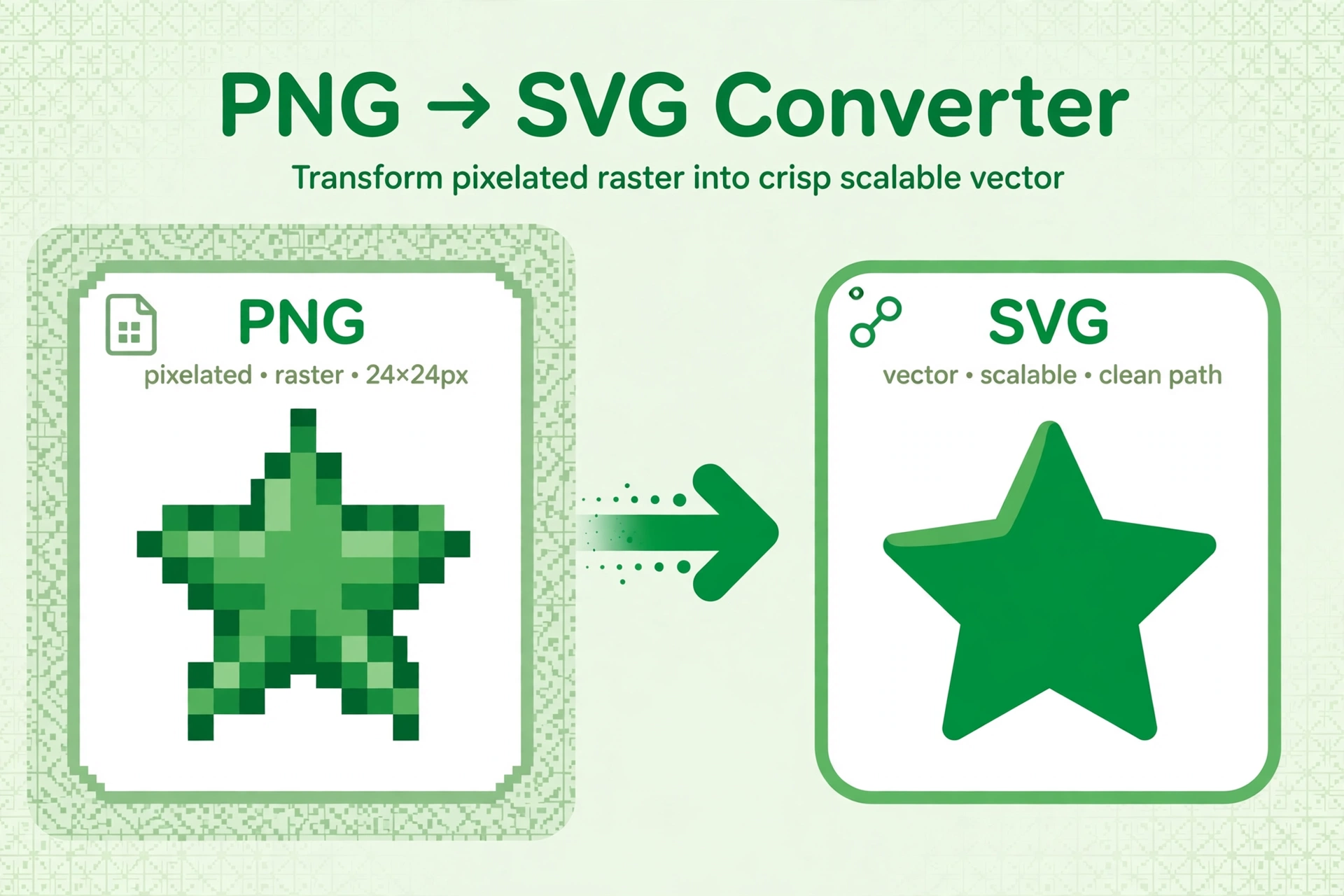
A PNG is made of pixels, so it turns blurry when you enlarge it. An SVG is made of paths and shapes, so it stays sharp at any size. Converting a PNG to SVG gives you a vectorized image you can use for logos, icons, print work and responsive websites. This guide explains when to convert and how to do it in minutes.
Why Convert PNG to SVG?
Vector graphics scale without losing quality, take up little space and can be edited easily. A logo saved as an SVG looks crisp on a phone screen, a laptop and a large printed banner alike. PNG files, by contrast, need a separate version for every size. If you plan to reuse a graphic often, SVG is the more flexible format.
How to Convert PNG to SVG Online
Follow these steps:
- Open the free PNG to SVG converter.
- Upload the PNG image you want to vectorize.
- Wait while the tool traces the shapes and colours in your image.
- Preview the SVG and check the edges and details.
- Download the finished SVG file.
Simple graphics with clear shapes and strong contrast convert best. Photographs with many colours and soft gradients are harder to trace, so keep your expectations realistic for complex images.
Tips for a Clean Vector Result
- Start with a high-resolution PNG with a plain background.
- Use logos, icons and line art rather than detailed photos.
- Simplify the image first if it has unnecessary texture.
- Test the SVG at several sizes before using it in a project.
Frequently Asked Questions
Is converting PNG to SVG free? Yes, the online converter is free to use, with no sign-up required.
Will my SVG stay sharp at any size? Yes, vector graphics scale without pixelation, so they stay sharp from icons to billboards.
Which images convert best? Logos, icons, illustrations and simple graphics with clear edges convert best.
Can I edit the SVG afterwards? Yes, you can open it in a vector editor to change colours, shapes and sizes.
Ready to make your graphics scalable? Try the free PNG to SVG converter now and create a vectorized image in seconds.