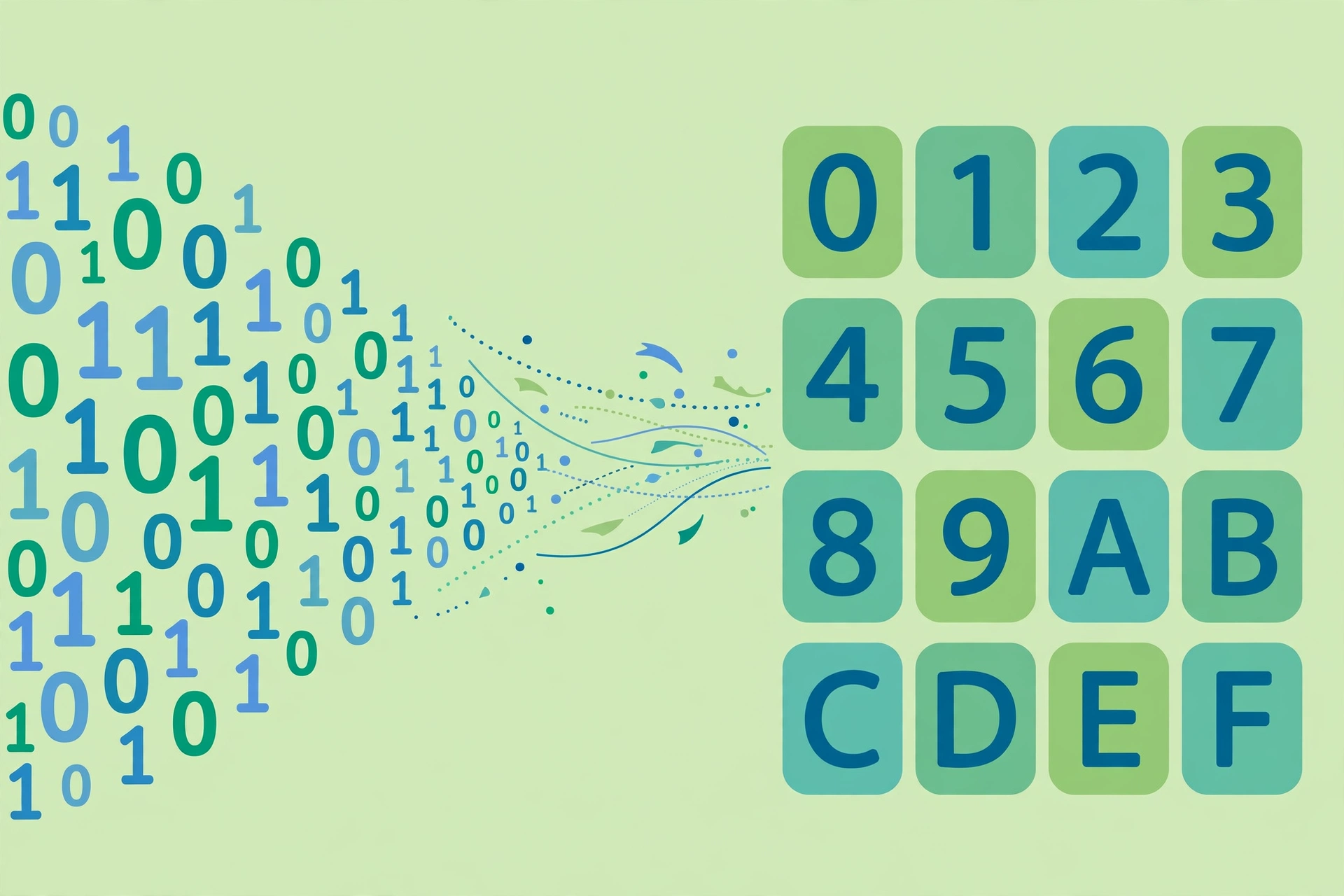
Binary to Hex: Convert Binary Numbers to Hexadecimal

Binary to hex conversion turns binary numbers, made of only 0s and 1s, into shorter hexadecimal numbers using digits 0 to 9 and letters A to F. It is a routine step in computing, electronics and programming.
The Group-of-Four Method
Split the binary number into groups of four bits, starting from the right. Then replace each group with its hex digit: 0000 is 0, 0001 is 1, 1010 is A, 1111 is F, and so on. For example, binary 1010 1101 becomes AD in hex, because 1010 is A and 1101 is D.
Padding With Leading Zeros
If the leftmost group has fewer than four bits, add leading zeros until it has four. This does not change the value. For instance, binary 101 becomes 0101, which is 5 in hex. Padding keeps every group aligned and prevents mistakes.
Why Hex Is Used
Hexadecimal is compact: one hex digit stands for four binary digits, so long binary strings become much shorter and easier to read. That is why memory addresses, colour codes such as #FF5733, and machine code are often shown in hex rather than binary.
Convert Binary to Hex Instantly
For long strings or a quick check, use our free Binary to Hex converter. Paste a binary number and get the hexadecimal result at once, without grouping bits by hand.